
When a foreclosure sale falls short of covering the full loan balance, private lenders can find themselves facing a significant financial gap. However, there is a powerful contractual mechanism that many experienced lenders rely on to bridge that gap: the personal guaranty agreement. Understanding how personal guaranties function within the framework of California lending law is essential for any private money lender looking to maximize debt recovery options.
California’s One-Action Rule and Its Impact on Lenders
California imposes strict limitations on how lenders can pursue debt recovery through its one-action rule. Under Cal. Code Civ. Proc. 726(a), a lender is permitted only a single form of action to recover a debt secured by real property. This means a lender must choose between options such as conducting a trustee’s sale, pursuing judicial foreclosure, or filing a lawsuit on the underlying promissory note.
Working alongside the one-action rule is the security-first principle, established in Walker v. Community Bank, 10 Cal. 3d 729 (1974). This doctrine mandates that lenders exhaust their remedies against the secured real property before seeking personal liability from the borrower. The practical consequence is straightforward: after foreclosure, a lender may still face an outstanding balance with limited avenues to collect it directly from the borrower.
How Personal Guaranty Agreements Work in Private Lending
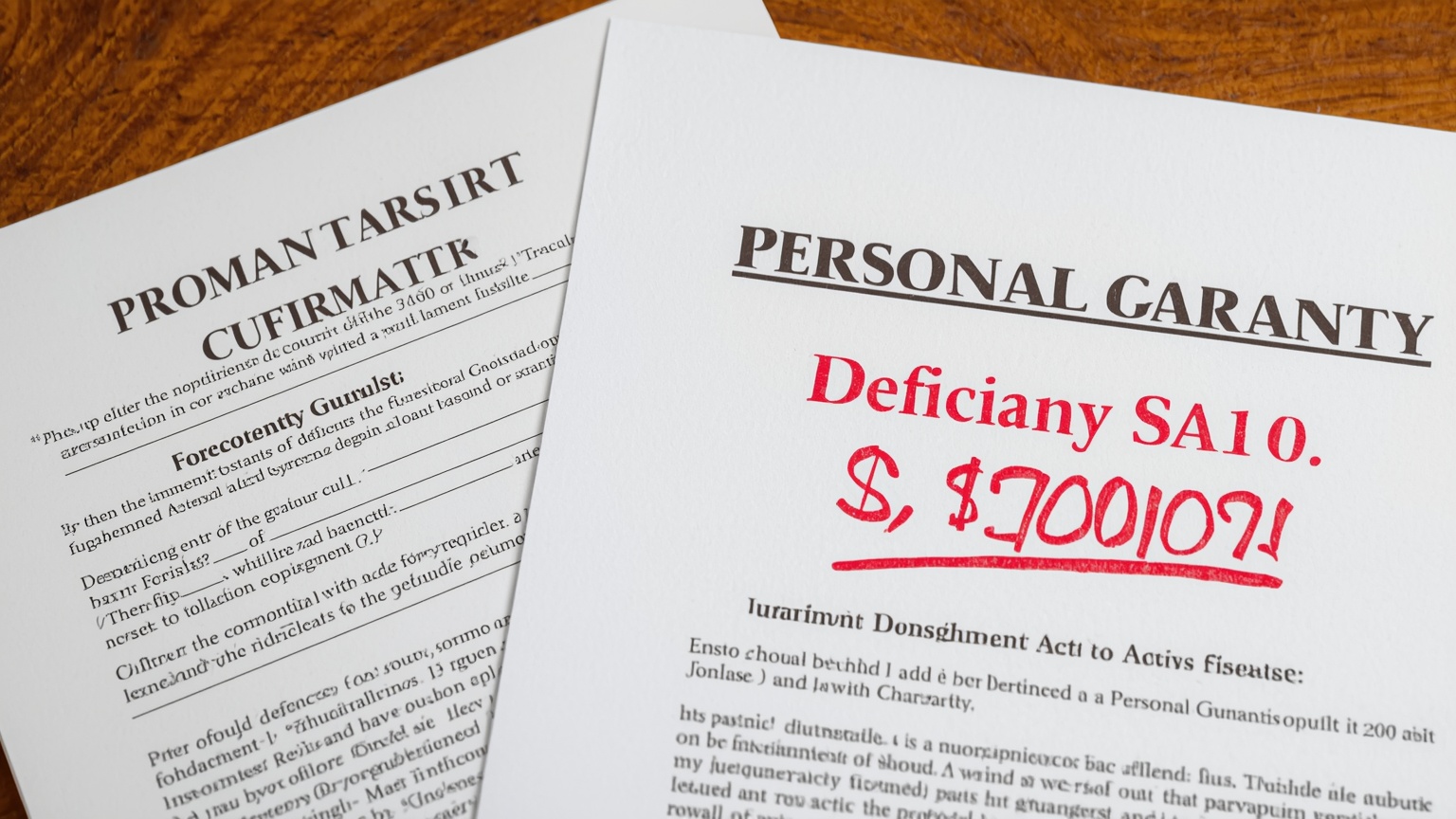
A personal guaranty is a separate, standalone contract between a lender and an individual who agrees to assume personal responsibility for repaying the loan if the primary borrower defaults. While typically executed as part of the initial loan documentation package, the guaranty exists independently from the promissory note and deed of trust.
This distinction is critical. Because the personal guaranty is a separate contractual obligation, it falls outside the scope of the one-action rule. After foreclosure leaves a deficiency balance, the lender can file a breach of contract action against the guarantor to recover the remaining amount owed.
In the private lending space, personal guaranties are particularly valuable because many borrowers are entities such as LLCs or corporations. The individual principals behind these entities may hold substantial personal wealth, and a personal guaranty creates a direct legal pathway to those assets for debt satisfaction.
What Assets Can Be Reached Through a Personal Guaranty
When a lender obtains a judgment by enforcing a personal guaranty, the range of recoverable assets is broad. A judgment against a guarantor can be enforced against:
- Bank accounts and cash deposits
- Investment and brokerage accounts
- Vehicles and personal property
- Real estate holdings owned by the guarantor
- Business interests and other liquid assets
This wide scope of enforcement makes personal guaranties one of the most effective tools available to private lenders for protecting their investment capital.
Two Types of Personal Guaranties Every Lender Should Know
Unlimited Personal Guaranties
An unlimited personal guaranty holds the guarantor responsible for the entire outstanding debt obligation, plus all associated costs. This includes accrued interest, collection expenses, and attorney fees incurred during enforcement proceedings. For lenders, an unlimited guaranty provides the broadest possible protection because it allows full recovery of every dollar invested in the transaction.
Limited Personal Guaranties
A limited personal guaranty caps the guarantor’s exposure at a predetermined dollar amount. These arrangements are frequently used in transactions involving multiple business partners who wish to divide their personal risk proportionally. For example, two partners in a joint venture might each sign a limited guaranty covering 50% of the total loan amount.
Many well-drafted limited guaranties also include what are commonly called “bad boy” carve-outs. These provisions convert the limited guaranty into an unlimited one if the borrower engages in fraud, misrepresentation, waste of the collateral, or other specified bad acts. This structure gives borrowers an incentive to cooperate throughout the loan term while providing lenders with enhanced protection against the most serious risks.
Strategic Value Beyond Direct Recovery
The benefits of holding a personal guaranty extend well beyond the possibility of collecting on a judgment. From a strategic standpoint, personal guaranties serve multiple purposes for private lenders:
- Encouraging settlement negotiations – Borrowers facing personal liability are far more motivated to negotiate repayment terms or restructuring arrangements rather than risk losing personal assets.
- Piercing the corporate shield – When borrowers attempt to shelter assets behind corporate structures or LLCs, a personal guaranty provides a direct claim against the individual, bypassing those protections entirely.
- Deterring default – The existence of a personal guaranty creates a powerful incentive for borrowers to prioritize repayment, knowing their personal wealth is at stake.
Best Practices for Private Lenders Using Personal Guaranties
To maximize the effectiveness of personal guaranty agreements, private lenders should ensure that each guaranty is properly drafted, clearly identifying the guarantor, the scope of the obligation, and the triggering events for enforcement. Working with experienced private lending counsel ensures that the guaranty language will withstand legal challenge and that all statutory requirements are met.
Lenders should also conduct thorough due diligence on potential guarantors before accepting a personal guaranty. Verifying that the guarantor has sufficient assets to make the guaranty meaningful is a critical step that is sometimes overlooked in the urgency of closing a deal.
Protect Your Lending Portfolio with Geraci LLP
A personal guaranty may seem like a standard piece of loan documentation, but in practice, it can be the single most important tool for recovering funds after a foreclosure falls short. Private lenders who consistently require well-drafted personal guaranty agreements position themselves for stronger recoveries and more successful lending operations overall.
Geraci LLP has been advising private lenders on loan documentation, foreclosure strategy, and debt recovery for nearly two decades. To discuss how personal guaranty agreements can strengthen your lending program, contact Geraci LLP at (949) 403-3488 or visit us at 90 Discovery, Irvine, CA 92618.