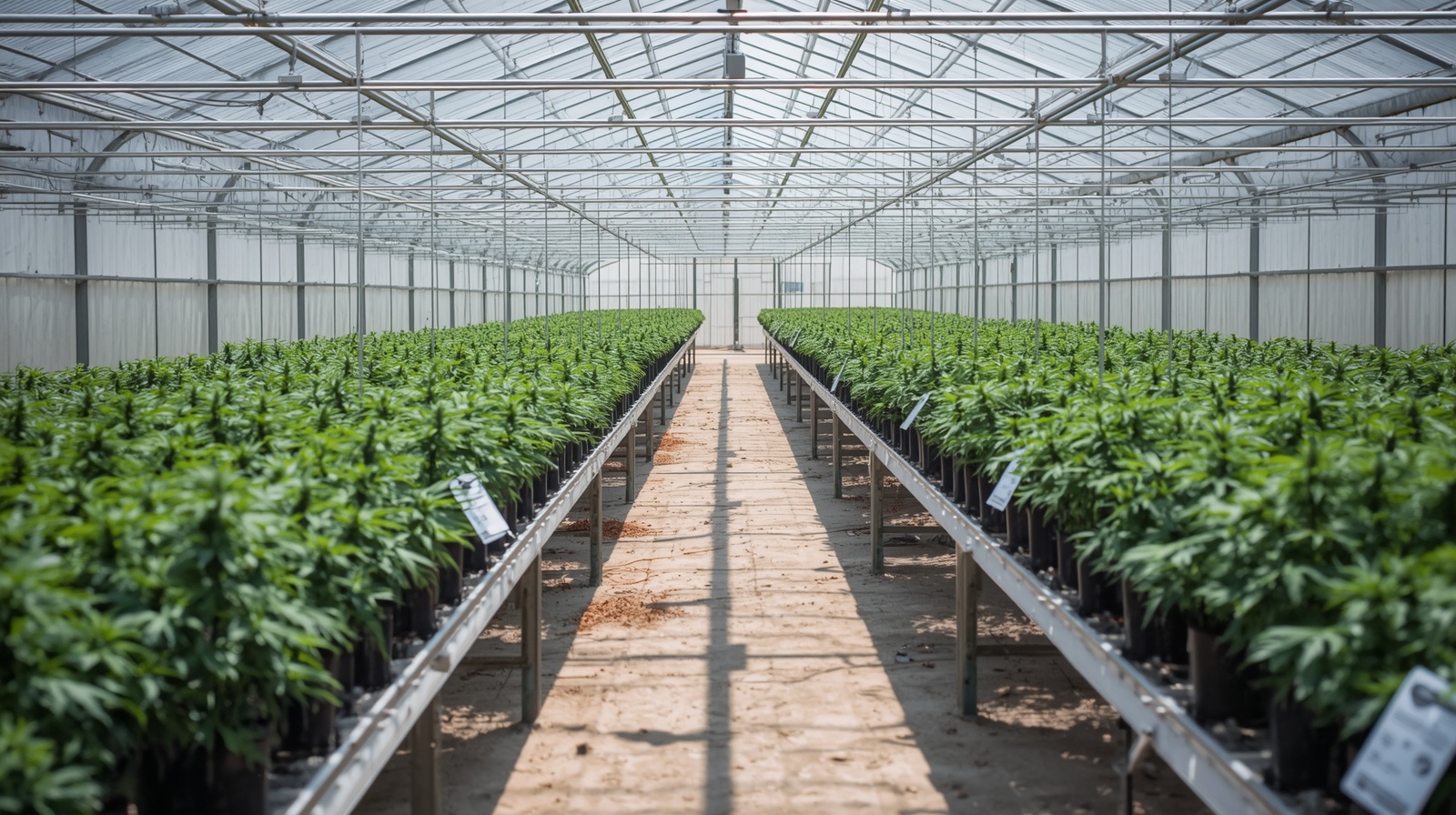

California’s legal cannabis market continues to expand, and with it comes a growing demand for financing from operators at every level of the supply chain. For private lenders, the cannabis sector represents a compelling opportunity, but one that comes with a distinct set of legal, regulatory, and collateral challenges that do not exist in traditional real estate lending.
The good news is that with proper structuring and risk awareness, private lenders can participate in cannabis-related financing while maintaining strong protections for their capital. This guide outlines the key risks and the strategic approaches that lenders should employ when financing cannabis operations in California.
The Federal-State Conflict Creates Unique Collateral Risks
The most significant challenge facing cannabis lenders remains the ongoing conflict between state and federal law. While California has legalized cannabis cultivation, processing, and sale under its own regulatory framework, cannabis remains a Schedule I controlled substance under federal law. This federal classification creates a persistent risk that federal agencies could seize cannabis-related assets, including assets that serve as collateral for private loans.
When a borrower’s operations cross into illegal territory, whether through operating without proper state licenses, exceeding permitted cultivation limits, or violating other regulatory requirements, the risk of asset seizure increases substantially. Federal and state agencies have the authority to confiscate property and equipment associated with illegal cannabis operations, and when they do, a lender’s collateral position is directly threatened.
However, lenders are not without recourse. If collateral is seized, lenders can file objections to notices of intent from the relevant agencies and often succeed in reclaiming their security interest in the seized assets. The critical step after reclaiming collateral is to ensure that the borrower no longer has access to the recovered assets. Returning collateral to a borrower who has already demonstrated regulatory noncompliance invites a repeat of the same problem.
Criminal Liability Concerns Are Largely Overstated
One of the most common concerns expressed by private lenders considering cannabis financing is the potential for criminal liability or charges under the Racketeer Influenced and Corrupt Organizations Act (RICO). In practice, these concerns are largely misplaced for lenders who are providing legitimate financing rather than actively participating in illegal operations.
The legal standard for criminal exposure requires knowing and intentional participation in criminal activity. A lender who provides financing for a cannabis operation that is licensed and operating within California’s regulatory framework faces minimal criminal risk. Courts have consistently distinguished between legitimate commercial lending activity and active criminal enterprise participation.
That said, prudent lenders should conduct thorough due diligence on their borrowers’ licensing and compliance status before funding. Verifying that all required state and local licenses are current, that the operation is within permitted scope, and that the borrower has a track record of regulatory compliance protects both the lender’s legal position and the viability of the underlying collateral.
Securing the Grow License as Collateral
One of the most valuable and frequently overlooked assets in a cannabis lending transaction is the borrower’s cultivation or operational license issued by the California Department of Cannabis Control. This license represents significant investment by the borrower in application fees, compliance infrastructure, and time spent navigating the state’s licensing process.
Requiring the borrower to pledge their cannabis license as collateral provides several strategic advantages for the lender:
- Unique asset value. Cannabis licenses in California are difficult and time-consuming to obtain. The license itself has substantial independent value that can provide meaningful recovery in a default scenario.
- Operational control. In the event of a borrower default, holding a security interest in the license gives the lender the ability to step into the borrower’s operational position or facilitate a transfer to a qualified replacement operator, rather than simply liquidating physical assets.
- Borrower incentive. Because the license represents the borrower’s ability to operate legally, pledging it as collateral creates a powerful incentive for the borrower to maintain loan performance. Losing the license means losing the business entirely.
Lenders should work with experienced counsel to ensure that the security interest in the license is properly documented and perfected under applicable California law, as the rules governing transferability and encumbrance of cannabis licenses have evolved significantly since the state’s licensing framework was first established.
Real Property and Equipment Security Interests
Beyond the cannabis license, lenders should establish comprehensive security interests in all tangible assets associated with the borrower’s operation.
Real property. A deed of trust on the real property where the cannabis operation is located provides the most traditional form of collateral protection. Whether the borrower owns the property or operates under a long-term lease, the lender should secure whatever real property interest exists. For leasehold operations, a leasehold deed of trust and an assignment of the lease provide the closest available substitute.
Equipment. Cannabis cultivation and processing operations rely on expensive specialized equipment, including grow lights, climate control systems, extraction equipment, processing machinery, and security infrastructure. A properly filed UCC-1 financing statement covering “all equipment” and “all inventory” ensures that the lender’s security interest attaches to all of these assets. Given the high replacement value of commercial cultivation equipment, this collateral position can be significant.
Inventory. Depending on the nature of the operation and the lender’s risk tolerance, taking a security interest in cannabis inventory may also be appropriate. However, inventory collateral in the cannabis space carries additional complexity due to the federal classification issue and the perishable nature of the product.
Handling Abandoned Property After Default
When a cannabis borrower defaults and vacates the property, lenders frequently discover that significant quantities of equipment, supplies, and other personal property have been left behind. Grow lights, irrigation systems, fertilizers, processing equipment, and other items can represent tens or even hundreds of thousands of dollars in value.
California law provides a framework for handling abandoned personal property, and lenders should be aware of their rights and obligations:
- Property valued under $700. For items reasonably estimated to have a total value below $700, the lender generally has the right to dispose of the property without conducting a public sale, after providing appropriate notice to the former borrower.
- Property valued at $700 or more. For higher-value property, California law requires the lender to conduct a public auction after providing proper notice. The proceeds of the sale are applied first to the costs of the sale and storage, then to any outstanding obligations owed by the former borrower.
Lenders should document the condition and estimated value of all abandoned property as soon as they take possession of the premises. Photographs, video documentation, and written inventories provide important protection against future claims by the borrower that property was mishandled or that its value was understated.
Due Diligence Best Practices for Cannabis Lending
Before committing capital to a cannabis lending transaction, lenders should implement a rigorous due diligence process that addresses the unique risks of the sector:
- License verification. Confirm that the borrower holds all required state and local licenses and that those licenses are current and in good standing. The California Department of Cannabis Control maintains public records that can be used for verification.
- Regulatory compliance history. Review the borrower’s history of regulatory compliance, including any citations, violations, or enforcement actions. A pattern of noncompliance is a significant risk indicator.
- Insurance coverage. Verify that the borrower maintains adequate insurance coverage for the property, equipment, and operations. Cannabis-specific insurance products have become more widely available as the industry has matured.
- Environmental compliance. Cannabis cultivation operations can raise environmental concerns related to water use, pesticide application, and waste disposal. Ensure that the borrower is in compliance with all applicable environmental regulations.
- Exit strategy analysis. Evaluate the lender’s realistic recovery options in a default scenario. Can the license be transferred? Is there a market for the equipment? What is the property’s value for alternative uses? Understanding the exit strategy before funding protects the lender from unpleasant surprises.
Approach Cannabis Financing with Discipline and Preparation
The California cannabis industry offers legitimate financing opportunities for private lenders who approach the sector with appropriate caution and structure. The key to successful cannabis lending lies in thorough due diligence, comprehensive collateral coverage, and a clear-eyed understanding of both the risks and the available protections.
From initial structuring through potential enforcement, working with legal counsel experienced in both private lending and cannabis regulatory matters ensures that your transaction is properly documented and your rights are fully preserved.
Contact Geraci LLP today at (949) 403-3488 or visit us at 90 Discovery, Irvine, CA 92618 to discuss financing strategies for cannabis-related lending.