

Construction lending is among the most complex and risk-intensive product types in the private lending space. From small kitchen renovations to ground-up multifamily developments, construction loans require lenders to navigate title complexities, documentation requirements, draw management, and default protections that are simply absent from standard bridge or term loans. This article provides a practical overview of the key considerations lenders should address before, during, and after closing a construction loan.
Start with Title Early—and Stay in Contact Throughout
The single most important piece of advice for private lenders making construction loans is to engage the title company early and maintain that relationship throughout the loan term. Lenders who treat title as a closing-day formality routinely discover that construction-related title issues require days, weeks, or even months to resolve—delays that are entirely avoidable with advance planning.
Mechanics Liens and Their Priority Implications
The foundational title concern on any construction loan is mechanics liens. A mechanics lien is a statutory remedy available to contractors, subcontractors, architects, engineers, and other vendors who have performed work or supplied materials on a property and have not been paid. Unlike most other liens, a mechanics lien relates back to the date work actually began on the property—not the date the lien was recorded.
This means that even if a lender closes a loan after construction begins, a subsequently recorded mechanics lien could establish priority over the lender’s deed of trust by relating back to an earlier date. Title companies underwriting construction loans are acutely aware of this risk, and they will scrutinize any evidence that work has already commenced before issuing mechanics lien coverage.
If construction has started before closing, lenders should expect the title company to require an indemnity package—detailed information about the project, the contractors involved, and the status of work—before agreeing to provide coverage. In some cases, the title company may require a complete pause of construction for a defined period before it will underwrite mechanics lien coverage at all.
The practical lesson: reach out to the title officer when the loan is first being evaluated, not when you are ready to close.
Title Policy Endorsements for Construction Loans
Beyond the standard ALTA lender’s policy, construction loans require two specialized endorsements:
ALTA 32 Endorsement. The ALTA 32 is issued at loan closing and provides coverage against mechanics liens that arise prior to the date of closing. If a contractor later records a mechanics lien that relates back to pre-closing work, the ALTA 32 protects the lender’s lien priority.
ALTA 33 Endorsements. The ALTA 33 is a post-closing endorsement that updates, or “dates down,” the mechanics lien coverage each time the lender makes a disbursement from the construction reserve. Because each disbursement potentially creates new exposure to mechanics liens for work performed since the last endorsement, lenders should obtain an ALTA 33 for each draw.
The practical approach: estimate the total number of draws at closing and prepay for that many ALTA 33 endorsements. Requiring the borrower to fund these costs at closing—before any disbursements are made—eliminates the administrative friction of collecting title fees throughout the loan term. Note that endorsement names may vary by state; if a title company claims the ALTA 32 or 33 is unavailable, ask whether an equivalent product exists under a different name before switching providers.
Small Project Considerations
Not every construction loan involves a complex ground-up development. Lenders make small renovation loans regularly—minor rehab projects, kitchen or bathroom upgrades, cosmetic repairs. For these smaller transactions, the documentation and oversight structure can and should be proportionally simpler.
How Much Structure Does the Project Need?
The guiding question for small projects is: how much control does the lender actually need, given the project’s scope, cost, and timeline?
For a simple single-draw project—say, replacing a HVAC system or refinishing floors—a basic holdback provision requiring the borrower to provide photographic evidence of completion before receiving the withheld funds may be entirely sufficient. The transaction cost of elaborate draw procedures and oversight mechanisms is not justified when the underlying project is straightforward.
For more complex rehab work involving multiple phases or higher dollar amounts, lenders should consider how they want disbursements to flow. Paying the borrower directly is administratively simpler, but it introduces the risk that the borrower fails to actually pay the contractor—leaving the contractor unpaid and potentially filing a mechanics lien. Paying the contractor directly eliminates this risk but requires the lender to establish a working relationship with a third party who is not party to the loan agreement. Neither approach is universally correct; the right choice depends on the lender’s comfort level and the project’s complexity.
Large Project Considerations
Ground-up construction and major rehabilitation projects involve a cast of characters and a set of risks that require a fundamentally different approach.
Assignments of Contracts, Plans, and Permits
When a borrower hires a general contractor, retains architects, and obtains permits for a large construction project, those relationships and entitlements have real value—particularly in a default scenario. If the borrower defaults and the lender must take over the project to protect its collateral, the ability to step into the borrower’s position with the existing contractor and architect in place can mean the difference between a managed resolution and an expensive restart.
Lenders should obtain executed assignments of the general contractor’s contract, any architectural or design agreements, and the project’s permits. These assignments must be signed not only by the borrower but also by the third party—the contractor, architect, or permit holder. A signed assignment from both parties creates privity of contract between the lender and the third party, giving the lender a clear legal basis to engage that party directly after a default.
If the borrower has not yet engaged a general contractor at closing, build a post-closing requirement into the loan documents: upon engagement of a general contractor, the borrower must deliver an executed assignment within a defined period (typically 10 days). Tie this obligation to a condition on the first draw—no assignment, no disbursement.
Funds Control
Funds control companies are third-party construction management firms that handle the draw review and disbursement process on behalf of lenders. When a borrower submits a draw request, the funds control company reviews the request, inspects the property (or reviews submitted documentation), verifies lien waivers, and approves or flags disbursements before funds are released.
Under California DRE regulations, funds control is required for certain construction loans—specifically, loans where the holdback exceeds $100,000 and the lender is relying on after-improved value to meet LTV requirements. Even when not legally required, funds control provides significant value on large projects: it brings dedicated expertise to a function that most lenders are not staffed to perform well, and it can also coordinate the ALTA 33 date-down process with the title company. The cost of funds control is typically borne by the borrower and should be built into the construction budget from the start.
Documenting the Agreement Properly
The loan documents on a construction transaction need to do more than establish repayment terms—they need to reflect the specific operational arrangement the lender and borrower have agreed upon. Boilerplate is useful, but it is rarely sufficient on its own.
Construction Loan Agreement Versus Basic Holdback Provision
For small projects, a holdback provision embedded in the standard loan agreement often provides adequate protection. For larger and more complex projects, a standalone construction loan agreement is generally warranted. A construction loan agreement typically includes enhanced default triggers specific to the construction process, formal disbursement provisions, requirements to maintain permits and continue work without unreasonable interruption, and provisions for lender oversight of the construction timeline.
Draw Schedules
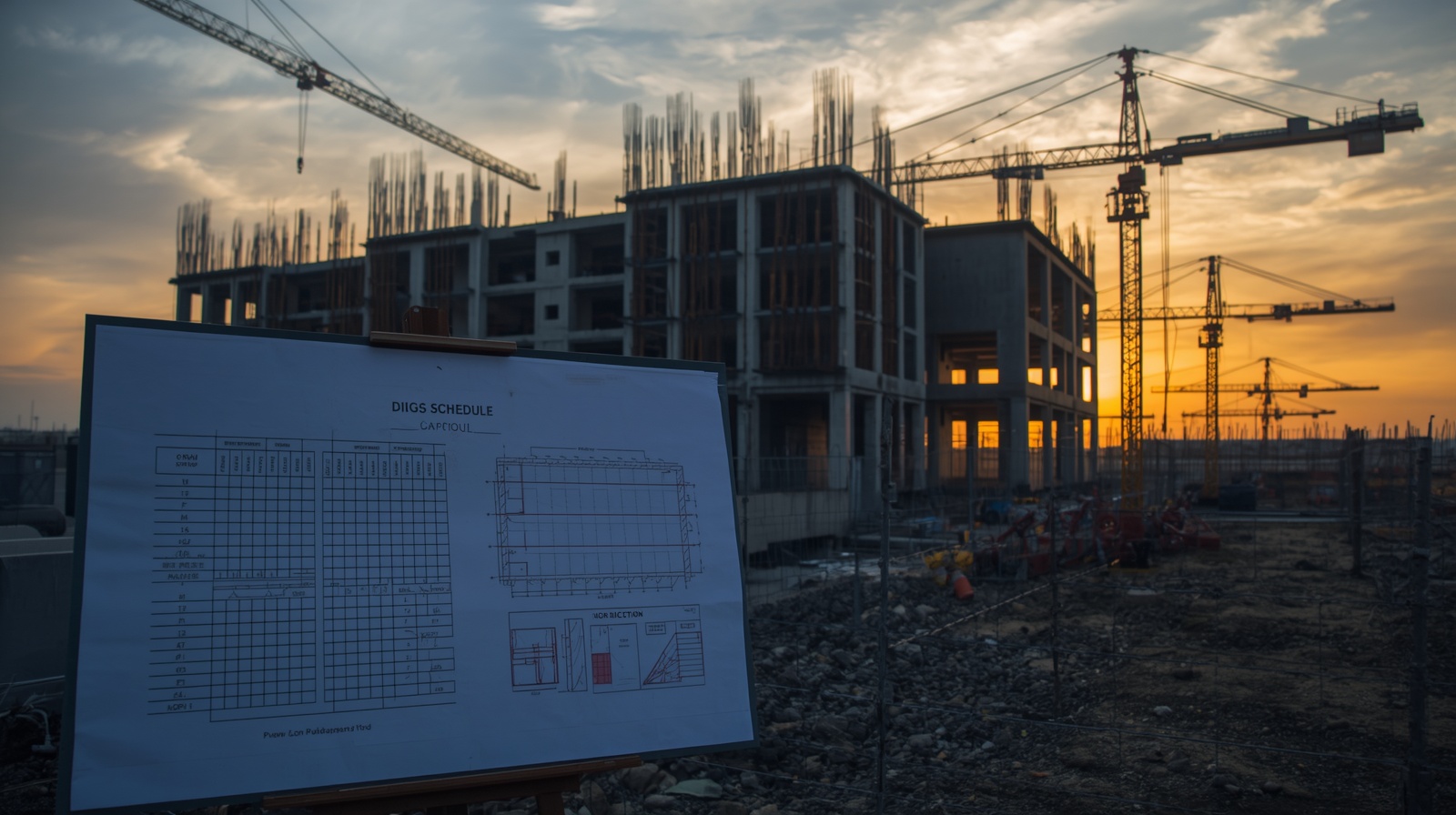
A draw schedule is a project budget broken down by phase, specifying the work to be completed and the dollar amount to be disbursed at each stage. Lenders who skip draw schedules on multi-phase projects lose the ability to track whether the project is on budget and on pace—and they often discover problems only after the construction reserve has been exhausted.
A well-structured draw schedule does not need to be elaborate; what matters is that it gives the lender meaningful visibility into progress and spending. For a complex project, the draw schedule should account for cost overages, specify how overages will be funded, and provide clear milestones against which progress can be measured.
Construction-Specific Events of Default
Standard loan documents define default primarily in terms of missed payments. Construction loans need additional default triggers that address the realities of the construction process. Lenders who omit these provisions frequently find themselves without clear contractual authority to act when a borrower stops work, misses construction milestones, or allows the project to stall.
Common construction-specific default provisions include:
- Failure to commence work within a defined period after closing
- Unauthorized work stoppage exceeding a specified number of consecutive days (often 20 days) without an approved extension
- Failure to complete within the loan term or agreed construction timeline
- LTV deterioration during construction if benchmarks are not met at specified points
- Environmental or permit violations that remain uncured within defined periods
Lenders should also consider project-specific defaults tailored to the particular transaction. If there is a known environmental condition that must be addressed by a certain milestone, a failure to complete that remediation can be made an explicit default trigger.
Common Mistakes to Avoid
Based on experience across many construction transactions, three errors appear with particular frequency:
Engaging title too late. Lenders who order the preliminary title report at the last minute and then disclose the construction nature of the loan on the eve of closing routinely face delays of weeks or months. Title companies need time to evaluate mechanics lien exposure, indemnity requirements, and endorsement eligibility. Early engagement avoids surprises.
Failing to obtain required assignments. Post-closing follow-up on assignment obligations tends to get deprioritized as the lender moves on to originating new business. The problem surfaces months later when a default occurs and the lender discovers there is no direct contractual relationship with the contractor or architect.
Omitting construction-specific defaults. A lender whose loan documents say nothing about work stoppages or completion deadlines has limited options when a borrower simply stops building. Adding these provisions at loan origination costs very little; litigating their absence in a workout context costs significantly more.
For assistance with construction loan documentation, title coordination, or compliance with California DRE construction loan requirements, contact Geraci LLP’s Banking and Finance team at (949) 403-3488 or at 90 Discovery, Irvine, CA 92618.



