
Why Every Private Lender Must Understand Preliminary Title Reports
Identifying a qualified borrower and suitable collateral property is only the first phase of a successful private lending transaction. Before committing capital to any real estate-secured loan, lenders must verify that the property’s title is free from defects, competing claims, and hidden encumbrances that could jeopardize their security interest. The preliminary title report is the primary tool for conducting this critical due diligence.
This document, issued before the title insurance policy, reveals the current state of ownership and identifies potential obstacles that could affect the lender’s ability to enforce its lien position or take ownership of the property through foreclosure.
What a Preliminary Title Report Contains
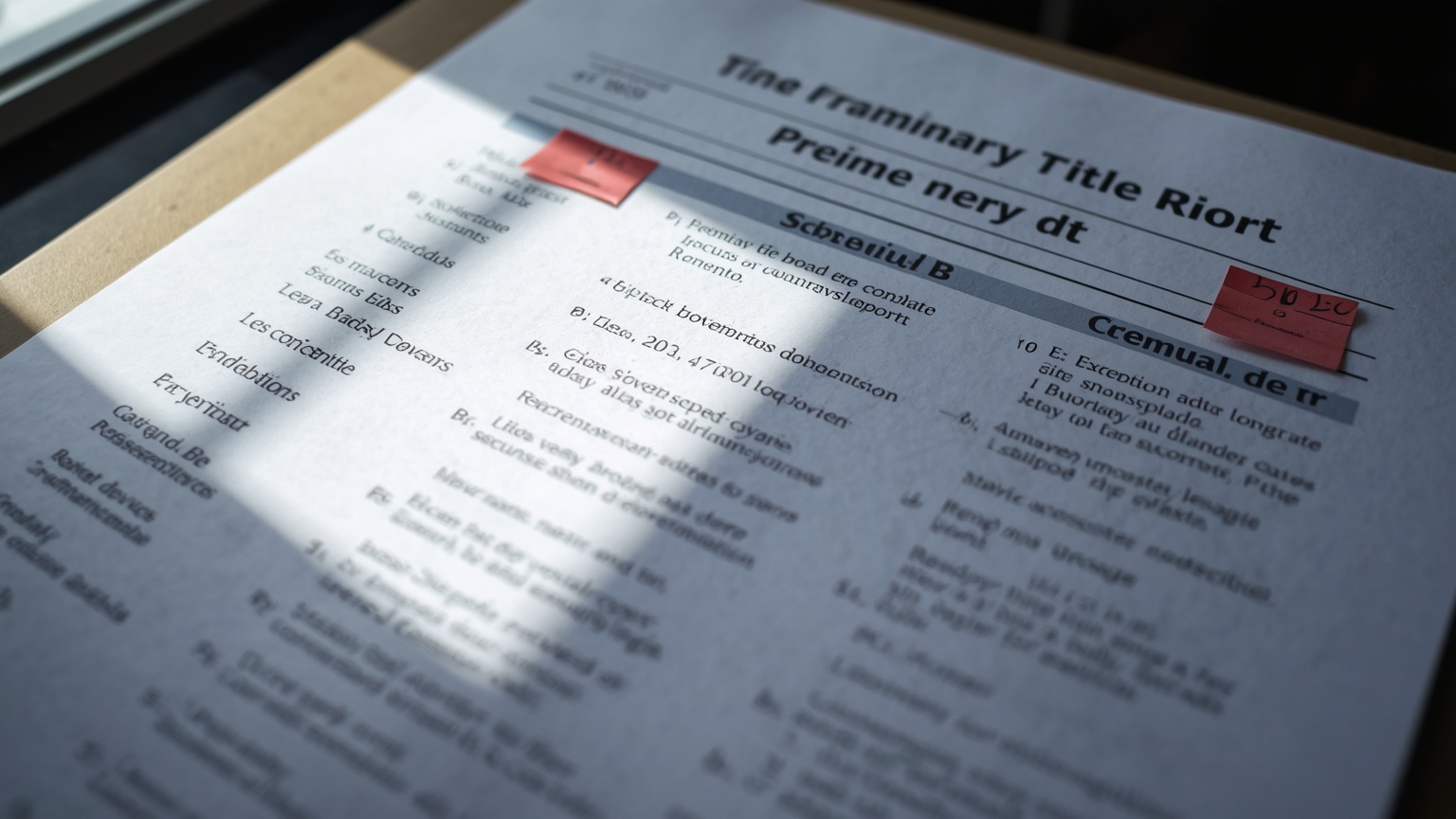
A preliminary title report is produced by a title company after a thorough examination of public records associated with a specific parcel of real property. The report provides several categories of essential information for the lender’s review.
Ownership Interest and Vesting
The report identifies the current legal owner of the property and describes the nature of their ownership interest. Most real estate transactions involve “fee simple” ownership, which represents the most complete form of property rights available under the law. However, the report may reveal lesser interests such as life estates, leasehold interests, or ownership subject to conditions.
For private lenders, understanding the borrower’s ownership interest is critical because the lender can only acquire rights equal to or less than what the borrower actually holds. If the borrower’s ownership is limited or conditional, the lender’s security interest and foreclosure options will be similarly constrained.
Listed Exceptions
Items that fall outside the scope of the forthcoming title insurance policy are listed as numbered “exceptions” in the preliminary report. These exceptions represent risks that the title insurance company will not cover, and they require careful evaluation by the lender.
Common exceptions include:
- Existing liens and encumbrances: Mortgages, deeds of trust, judgment liens, mechanic’s liens, and tax liens from prior transactions or unpaid obligations
- Property tax obligations: Outstanding property taxes or special assessments that create statutory liens against the property
- Covenants, conditions, and restrictions (CC&Rs): Recorded declarations from prior owners or homeowners associations that govern permitted uses, building standards, and other property-related restrictions
- Easements: Rights held by third parties to use portions of the property for specific purposes, such as utility access, shared driveways, or drainage
- Pending litigation: Active lawsuits that could result in claims against the property
Standard Exclusions
In addition to property-specific exceptions, preliminary reports include a schedule of standard exclusions that apply broadly to all policies issued by that title company. These typically include matters such as local zoning ordinances, building codes, and government regulations that affect property use. Lenders planning to develop or modify a property after foreclosure should pay particular attention to these exclusions, as they may limit future construction or renovation options.
How to Evaluate a Preliminary Title Report
Reviewing a preliminary report requires more than simply reading through the listed exceptions. Effective evaluation involves analyzing how each item affects the lender’s security interest and developing a strategy to address problematic findings before closing.
Assess Lien Priority
The order in which liens are recorded determines their priority in the event of foreclosure. A private lender must confirm that their deed of trust will hold the desired priority position, typically first position, after closing. If the preliminary report reveals existing liens that would take priority, the lender must require their satisfaction as a condition of funding.
Request Removal of Problematic Exceptions
Not every exception listed in a preliminary report is permanent. Lenders can request that the title company remove specific exceptions by requiring the seller or borrower to resolve the underlying issue before closing. Tax liens can be paid, judgments can be satisfied, and outdated encumbrances can be released through appropriate legal processes.
Evaluate the Impact of Remaining Exceptions
Some exceptions cannot be removed and must be evaluated for their practical impact on the property’s value and the lender’s security interest. Easements, for example, are typically permanent features of a property’s title. A lender must assess whether an easement materially affects the property’s usability or marketability.
The Distinction Between Preliminary Reports and Title Insurance
A preliminary title report is not itself an insurance policy. It is an offer from the title insurance company to issue a policy subject to the terms, conditions, and exceptions described in the report. No contractual obligation or liability exists between the lender and the title company until the policy is formally issued.
However, title companies may offer interim protections through two mechanisms:
- Binders: Temporary agreements that provide limited coverage between the time of commitment and the issuance of the final policy
- Commitments: Contractual obligations by the title company to issue a policy once all specified conditions have been satisfied
Understanding this distinction helps lenders manage their risk exposure during the period between the preliminary report and the issuance of the final title insurance policy.
Key Limitations to Keep in Mind
A preliminary title report is not a comprehensive guarantee of clear title. It reflects only the information available in public records at the time of the search. Certain defects, such as forged documents, undisclosed heirs, or unrecorded interests, may not appear in the report but could still affect title to the property.
This limitation underscores the importance of obtaining a full title insurance policy rather than relying solely on the preliminary report. Title insurance protects the lender against both known exceptions (which can be negotiated) and unknown defects that may surface after closing.
Protecting Your Lending Operations
Preliminary title reports are an indispensable component of the private lending due diligence process. By thoroughly reviewing these reports and understanding their implications, lenders can identify potential title issues before they become costly problems and negotiate appropriate protections before committing capital.
For assistance with title review, loan documentation, and real estate lending compliance, contact Geraci LLP at (949) 403-3488 or visit us at 90 Discovery, Irvine, CA 92618.