
The ongoing tension between federal cannabis law and state-level legalization efforts has long created significant uncertainty for private lenders, real estate developers, and businesses operating in cannabis-adjacent industries. A notable legislative development in 2019 advanced the cause of state autonomy on cannabis regulation—and the downstream effects on lending and commercial real estate continue to matter for lenders navigating this space.
The House Amendment: Scope and Significance
In June 2019, the House of Representatives passed a broad amendment prohibiting the Department of Justice (DOJ) from using federal resources to interfere with state cannabis laws, including those permitting recreational use, cultivation, and sale. The amendment also extended this protection to cannabis legislation in the District of Columbia and U.S. territories, and was incorporated into a multi-provision appropriations bill governing federal funding for the upcoming fiscal year.
The amendment passed by a floor vote of 267 to 165—a margin that legalization advocates characterized as evidence of measurably growing bipartisan support for federal deference to state cannabis policy. The measure was sponsored by Representatives Earl Blumenauer (D-OR), Eleanor Holmes Norton (D-DC), and Tom McClintock (R-CA).
The scope of the 2019 amendment represented a meaningful expansion of a prior policy first enacted in 2014 that had been renewed annually through spending bills. The earlier version protected only state medical marijuana programs from federal intervention. The 2019 measure extended that protection to adult recreational use programs as well.
History and Political Context
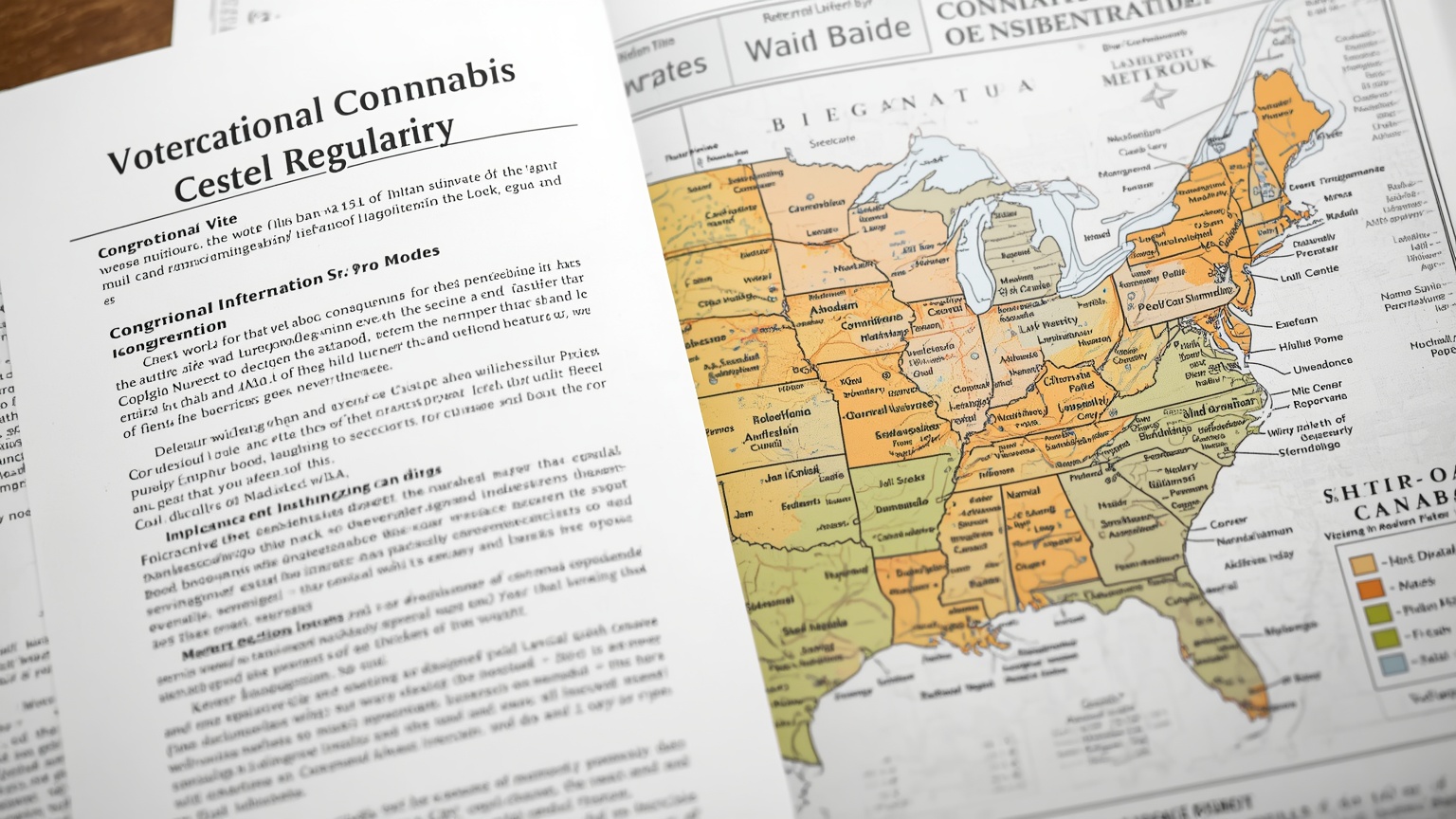
The 2014 rider establishing limited federal deference to state medical cannabis laws had been renewed each year as part of federal spending legislation, establishing a baseline of protection for medical marijuana programs. In 2015, a broader measure similar to the 2019 amendment was narrowly defeated in the House, failing by nine votes. By 2019, the political landscape had shifted: the number of states with comprehensive cannabis legalization programs had grown substantially, meaning a larger portion of House members represented constituencies with direct stakes in legalization.
Representative McClintock circulated a letter to colleagues before the 2019 vote arguing that the constitutional question was straightforward: the federal government lacks the authority to dictate state criminal justice policy with respect to activities that occur entirely within state borders. His position was that states should retain the power to set their own standards.
Legislative Activity Beyond the Main Amendment
The June 2019 House session included several other cannabis-related votes. A separate amendment protecting the cannabis regulations of federally recognized Native American tribes passed without a single request for a roll call vote and was also incorporated into the fiscal year 2020 spending bill.
The House also passed a related provision directing the FDA to establish a regulatory framework for CBD-based food products and dietary supplements—a response to the widespread commercial availability of CBD products that had outpaced existing regulatory guidance. Separately, legislation passed through a committee that would protect financial institutions from federal prosecution for providing banking services to cannabis businesses operating lawfully under state law, while also removing a long-standing provision that had prevented the District of Columbia from using its own local tax revenues to establish a regulated cannabis market.
Additional cannabis-related hearings were underway in other committees, including the Veterans’ Affairs Committee (examining veterans’ access to medical cannabis through VA physicians) and the Small Business Committee (addressing challenges facing cannabis-industry businesses). The SAFE Banking Act—designed to allow banks and credit unions to serve the cannabis industry without federal penalty—had passed out of the Financial Services Committee and was advancing toward a full House vote.
What Lenders Need to Understand
For private lenders, the ongoing federal-state divide on cannabis creates a complex risk environment. Despite state-level legalization in numerous jurisdictions, cannabis remains a Schedule I controlled substance under federal law. This classification means that federally chartered banks and federally regulated lenders generally cannot serve cannabis businesses without exposure to federal liability.
The 2019 House measures did not change the underlying federal classification of cannabis, and the Senate’s response remained uncertain at the time. The appropriations riders prevent the DOJ from spending resources to enforce federal law against state-compliant cannabis operations, but they do not decriminalize cannabis federally or eliminate the underlying statutory prohibition.
For private lenders—who are not subject to the same federal regulatory framework as banks—the question of whether to extend financing to cannabis businesses or cannabis-adjacent real estate requires careful analysis of the specific loan structure, state law compliance, and risk tolerance. The legal landscape in this area continues to develop, and what constituted sound practice in 2019 has evolved alongside subsequent legislative activity, regulatory guidance, and state law changes.
Implications for Private Lending and Real Estate
Real estate secured by cannabis-related properties presents unique considerations for lenders. Title insurers, investors, and secondary market participants may be reluctant to engage with these assets due to the federal classification. Construction and commercial loans for cannabis facilities require lenders to evaluate both the immediate state-law compliance of the borrower and the longer-term enforceability of the loan in a federally regulated environment.
The trajectory of congressional action—while slow and nonlinear—has generally moved toward greater accommodation of state cannabis programs. Private lenders operating in this space should work with legal counsel experienced in both federal securities law and state cannabis regulations before structuring any loan involving cannabis businesses or cannabis-adjacent properties.
Geraci LLP’s attorneys have extensive experience advising private lenders on complex lending scenarios, including those involving emerging regulatory environments. For guidance on lending compliance issues, contact us at (949) 403-3488 or at 90 Discovery, Irvine, CA 92618.